
What Is Payment Processing? A Plain-English Breakdown
Confused by payment processing? We break down exactly how money moves from your customer's wallet to your bank account — in plain English.
Introduction
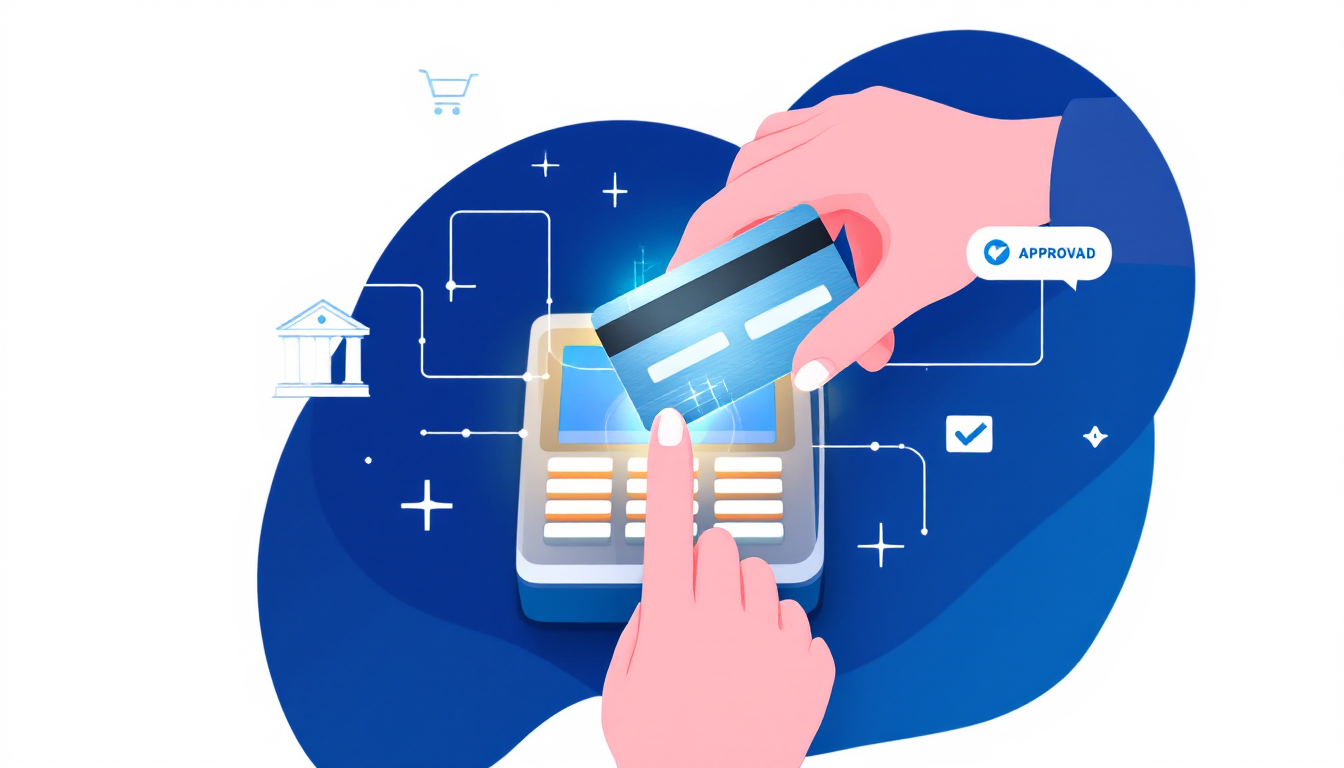
Every time a customer swipes a card, taps their phone, or enters their credit card number online, a complex series of events happens in the background — all within seconds. That process is called payment processing, and if you run a business, understanding it isn't just helpful — it's essential.
Whether you're a brick-and-mortar shop owner in New Jersey, an e-commerce entrepreneur in Florida, or a startup launching your first website, this guide will walk you through exactly how payment processing works, who the key players are, and why it matters for your bottom line.
What Is Payment Processing?
Payment processing is the system that handles the transfer of funds between a customer and a business. When a customer pays for something — whether in person, online, or via mobile — payment processing is the behind-the-scenes infrastructure that makes that transaction happen securely and accurately.
Think of it like a digital relay race. The baton (your money) passes through several hands before it lands in your bank account. Each player in that race has a specific role, and understanding those roles helps you make smarter decisions about how you accept payments in your business.
The Key Players in Payment Processing
Before we walk through the process step by step, let's meet the main characters:
- The Customer: The person making the purchase using a credit card, debit card, digital wallet, or other payment method.
- The Merchant: That's you — the business owner accepting the payment.
- The Payment Gateway: The technology that securely captures and transmits payment data. Think of it as the digital point-of-sale terminal for online transactions. Popular gateways include Stripe, PayPal, and Authorize.net.
- The Payment Processor: The company that communicates between the merchant's bank and the customer's bank to authorize and complete the transaction.
- The Issuing Bank: The bank that issued the customer's credit or debit card (e.g., Chase, Bank of America).
- The Acquiring Bank (Merchant Bank): The bank that holds your business account and receives the funds.
- The Card Networks: Companies like Visa, Mastercard, American Express, and Discover that set the rules and facilitate communication between banks.
How Does Payment Processing Actually Work?
Let's walk through a real-world example. A customer visits your online store and purchases a product for $100 using their Visa credit card. Here's what happens next:
- Step 1 — Authorization Request: The customer enters their card details at checkout. Your payment gateway encrypts this data and sends it to your payment processor.
- Step 2 — Network Routing: The processor forwards the transaction details to the appropriate card network (in this case, Visa), which then routes it to the customer's issuing bank.
- Step 3 — Approval or Decline: The issuing bank checks whether the customer has sufficient funds or credit, verifies the transaction isn't fraudulent, and sends back an approval or decline response — all in a matter of seconds.
- Step 4 — Authorization Complete: The approval travels back through the network to your payment gateway, which notifies both you and the customer that the transaction was successful.
- Step 5 — Settlement: At the end of the business day, your processor batches all approved transactions and initiates the transfer of funds from the issuing bank to your acquiring bank, minus any processing fees.
- Step 6 — Funding: Within 1-3 business days, the funds appear in your business bank account.
Types of Payment Processing
Payment processing isn't one-size-fits-all. Depending on your business model, you may need one or more of the following:
- In-Person (Card Present): Transactions made at a physical point of sale using a card reader or terminal. Common for retail stores, restaurants, and service businesses.
- Online (Card Not Present): Transactions made through a website or app where the card isn't physically present. This is the standard for e-commerce businesses.
- Mobile Payments: Payments made via smartphones using digital wallets like Apple Pay, Google Pay, or Samsung Pay.
- Recurring Payments: Automated billing for subscription-based businesses, memberships, or retainer services.
- Invoicing & ACH Transfers: Bank-to-bank transfers often used for B2B transactions or larger payments.
What Are Payment Processing Fees?
Nothing in life is free — and payment processing is no exception. Every time a transaction is processed, fees are charged. These typically include:
- Interchange Fees: Charged by the issuing bank. These are non-negotiable and vary based on card type and transaction method.
- Assessment Fees: Charged by the card networks (Visa, Mastercard, etc.).
- Processor Markup: The fee charged by your payment processor on top of interchange and assessment fees. This is where you have room to negotiate.
For most small businesses, total processing fees range from 1.5% to 3.5% per transaction, depending on the processor and payment method. We'll dive deep into fees in a future post in this series.
Why Payment Processing Matters for Your Website
If you run an online business, your payment processing setup is directly tied to your website's performance. A clunky, slow, or confusing checkout experience can cause customers to abandon their carts — no matter how great your product is.
At The Web Design Hub, we specialize in integrating payment processing solutions seamlessly into your website. Whether you need a simple buy button or a fully custom e-commerce checkout flow, we ensure your payment experience is fast, secure, and conversion-optimized.
The right payment setup doesn't just process transactions — it builds trust, reduces friction, and increases revenue.
Popular Payment Processors at a Glance
There are dozens of payment processors on the market today. Here are some of the most popular ones you'll encounter throughout this series:
- Stripe: Developer-friendly, highly customizable, excellent for online businesses and SaaS.
- PayPal: Widely recognized and trusted by consumers worldwide. Great for small businesses and freelancers.
- Square: Ideal for businesses that need both in-person and online payment solutions.
- Authorize.net: A veteran gateway with robust features for established businesses.
- Braintree: A PayPal company offering flexible integration options for growing businesses.
- Clover: A powerful POS system with integrated payment processing for retail and restaurants.
We'll be doing a full head-to-head comparison of these processors later in this series — so stay tuned.
Is Your Business Set Up for Payment Processing Success?
Understanding payment processing is the first step. The next step is making sure your business is set up with the right tools, the right processor, and a website designed to convert visitors into paying customers.
If you're not sure where to start — or if you suspect your current setup is costing you money or customers — The Web Design Hub is here to help. Our team integrates industry-leading payment solutions into beautifully designed, high-converting websites for businesses in New Jersey, Florida, and beyond.
📞 New Jersey: (908) 259-6730
📞 Florida: (786) 998-4290
📞 Toll Free: (866) 519-7440
What's Next in This Series?
Now that you understand the fundamentals of payment processing, it's time to go deeper. In our next post, we'll cover how to choose the right payment processor for your specific business — including the key questions you need to ask before signing any contracts.
Bookmark this series, share it with a fellow business owner, and check back in three days for the next installment. The world of payments is more powerful than most business owners realize — and we're just getting started.
The Web Design Hub Team
Expert web design, development & digital marketing
Was this article helpful?
Ready to grow your business online?
Let's talk about your project — no pressure, just a friendly conversation.
Book a free consultation